
Audio
HyperX QuadCast 2 S Review: 32-Bit Capture, Zero Fuss
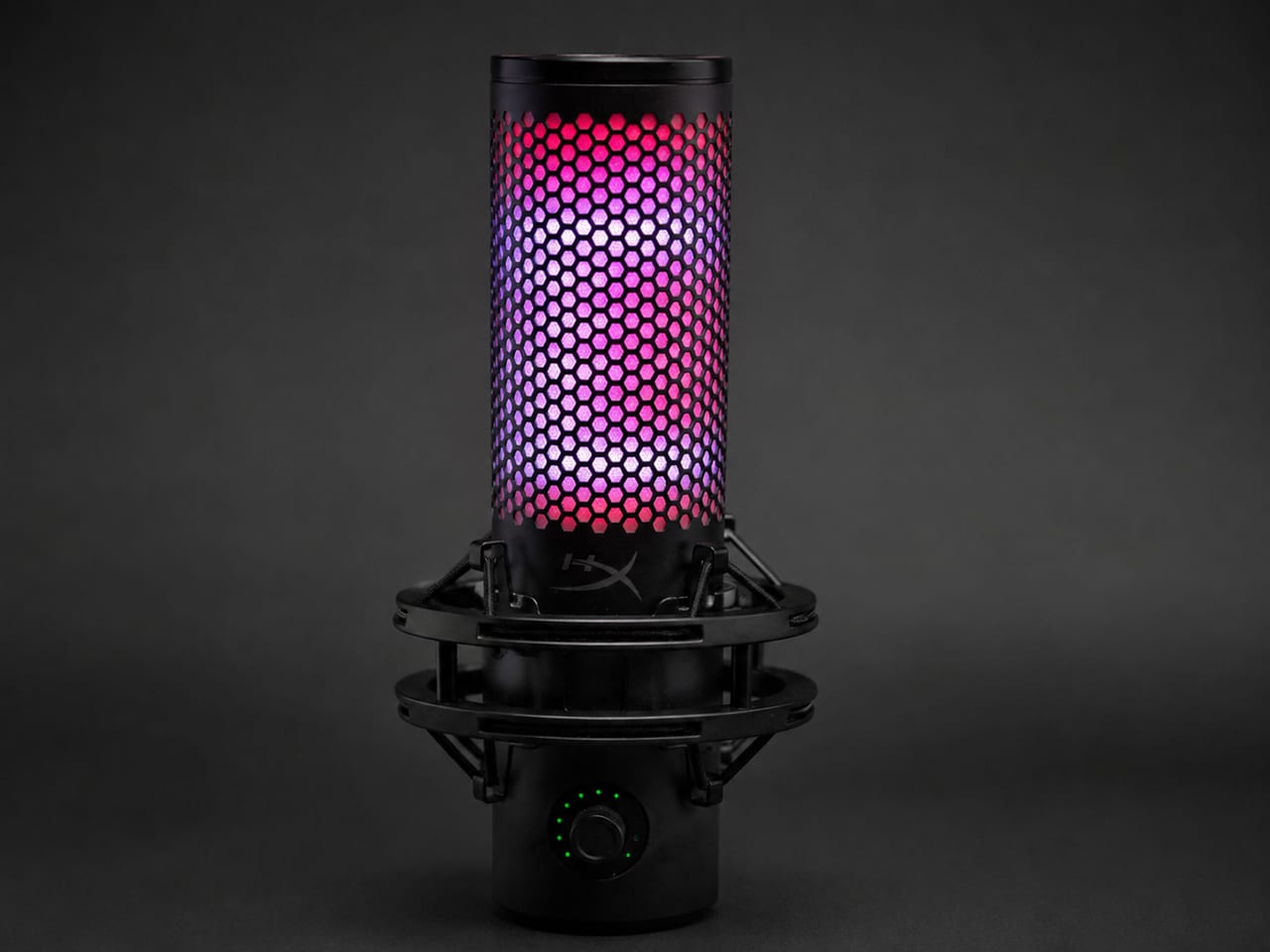

The original QuadCast S became a fixture on desks and stream overlays alike, recognizable by its full-body RGB lighting and built-in shock mount. The QuadCast 2 S refines that formula with 32-bit sampling at up to 192 kHz, a redesigned multifunction control dial, and USB-C connectivity, positioning it as a serious USB condenser microphone rather than a novelty light fixture.
Why I Bought It
Producing narrated training material demands consistent, clean vocal capture without the overhead of an audio interface and XLR chain. The original QuadCast served that role for years; the second generation’s higher-resolution capture and improved onboard controls made the upgrade a straightforward decision.
Real-World Use
Recorded voice is noticeably cleaner than its predecessor, with the higher sample rate providing generous headroom for post-processing. The four selectable polar patterns, cardioid, stereo, omnidirectional, and bidirectional, cover solo narration, two-person interviews, and room capture without repositioning. The tap-to-mute sensor on the top of the microphone remains one of the best implementations in the category; the lighting state makes mute status unambiguous at a glance, which has prevented more than one hot-microphone incident during virtual meetings. The multifunction dial handles gain, headphone volume, and monitoring blend, and HyperX’s NGENUITY software manages lighting and pattern selection.
The physical package is equally considered. The integrated shock mount isolates the capsule from desk vibration convincingly; keyboard strikes transmit through the boom arm of lesser microphones, and the QuadCast 2 S largely ignores them. The internal pop filter handles plosives well enough that an external filter never joined the setup. USB-C connectivity replaced the previous generation’s fragile connector, and the included adapter and mount threading fit standard boom arms without additional purchases. Direct headphone monitoring through the microphone remains latency-free and adjustable on the device itself, which matters during long recording sessions.
What I Dislike
Condenser sensitivity cuts both ways. In an untreated room, the microphone documents the environment as faithfully as it documents the voice, and taming that requires either acoustic treatment or software gating. I also find the RGB lighting, while attractive, entirely unnecessary for my use; fortunately it can be disabled.
Why I Recommend It
The QuadCast 2 S delivers near-interface audio quality in a single USB cable, with controls that respect how people actually record. For streamers, educators, and remote professionals who want excellent audio without an audio engineering hobby, it is among the easiest recommendations in the category.